
When Postpartum Help Feels Overwhelming and What Actually Helps
This is a subtitle for your new post
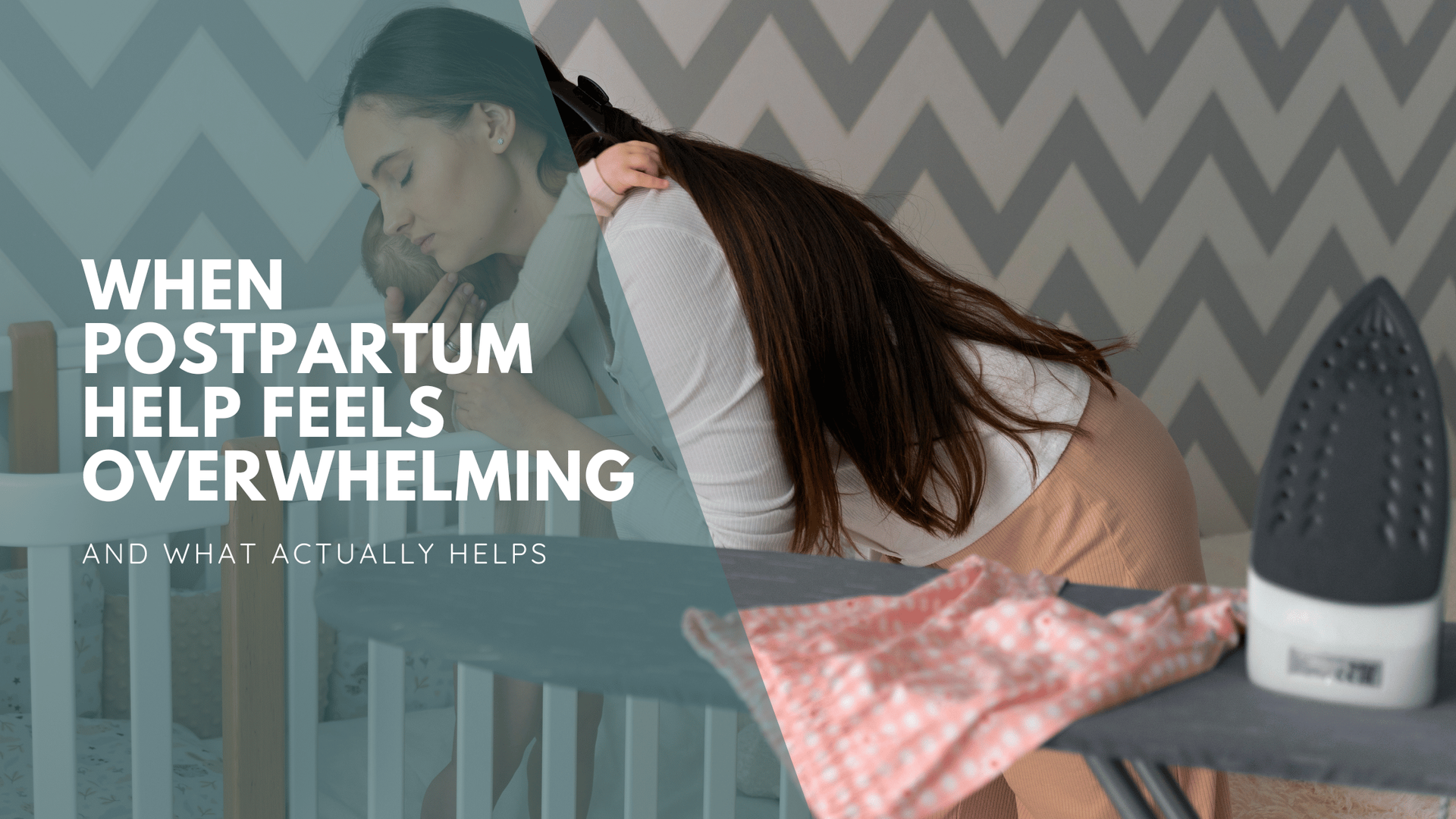
Most people assume more help will make postpartum easier, and that’s usually the case. But sometimes it somehow makes everything feel more stressful.
You might have someone in your kitchen trying to be helpful while you’re half-awake, holding a baby, and answering questions you don’t have the energy for.
“Where do you keep this?”
“Is this how you usually do it?”
“What should I work on next?”
Now, instead of resting, you’re managing someone else.
This is the part people don’t talk about. Help can still leave you carrying the mental load.
That doesn’t mean anyone is doing something wrong. It just means postpartum support isn’t as simple as “more hands = less stress.”
Why Some Help Ends Up Feeling Like More Work
It usually comes down to the fact that you’re still the point person. You’re the one explaining, deciding, and keeping track of what’s happening.
That can be:
- Answering questions while you’re feeding the baby
- Re-explaining how something works because it wasn’t done the way you expected
- Trying to rest but staying alert because something still feels “unfinished”
Even small things can tip the scale.
Someone drops off groceries, which is kind and helpful, but now you’re figuring out where everything goes, what needs to be prepped, and what didn’t get ordered.
Or someone does the laundry, but you end up re-sorting it later because it’s not how you usually handle it.
None of this is a big deal on its own, but when you’re already tired, it adds up fast.
What Makes Support Better
Helpful support doesn’t just take tasks off your plate. It takes thinking off your plate. That’s the difference.
Be specific, even if it feels awkward.
“Let me know if you need anything” sounds nice, but it puts the work back on you.
It’s easier to say:
- “Can you handle dinner tonight? ”
- “Can you take the baby for 30 minutes so I can lie down?”
- “Can you walk the dog while I’m feeding the baby?”
Clear asks mean fewer follow-up questions, which means less mental load.
Let some things be done differently.
This is the hard one. Sometimes, help only works if you let go of how you would do it.
That might mean the dishwasher is loaded differently or the baby is settled in a way you wouldn’t have chosen.
If it’s safe, it’s okay. The dishes will still get cleaned. The baby will still sleep. You don’t need to supervise everything.
Fewer people, clearer roles.
A house full of helpers can sometimes feel chaotic.
Too many people asking what’s needed can leave you answering the same question over and over.
It might be easier to have one or two people who know what they’re responsible for and can just do it without constantly checking in.
Keep a running list so you’re not holding it all in your head.
In the early weeks, it’s not just the tasks. It’s remembering the tasks.
Having a simple list somewhere (notes app, paper, shared doc) gives you a place to put things down instead of mentally tracking everything.
Then, when someone asks how they can help, you’re not starting from scratch.
Rest still counts as a valid use of help.
A lot of parents feel like they need to “use” help productively, but sometimes the most useful thing you can do is step away.
Take a shower without rushing.
Lie down, even if you don’t fall asleep.
Sit somewhere quiet for a few minutes without being needed.
That’s part of recovery.
It’s Not About More Help. It’s About the Right Kind.
The goal isn’t to have as much help as possible. It’s to have support that actually lets you exhale.
The kind where you’re not half-managing from the couch and where things get handled without your extra attention.
Sometimes that takes a little more communication and adjusting expectations on both sides, but when support is set up in a way that truly reduces your mental load, everything starts to feel less overwhelming.
If you’re trying to figure out what support should look like in your home, we can help you with that. Reach out anytime to talk more about it.