
Creating Your Postpartum Plan: Support, Rest, and a Softer Landing Into Motherhood
Creating Your Postpartum Plan: Support, Rest, and a Softer Landing Into Motherhood
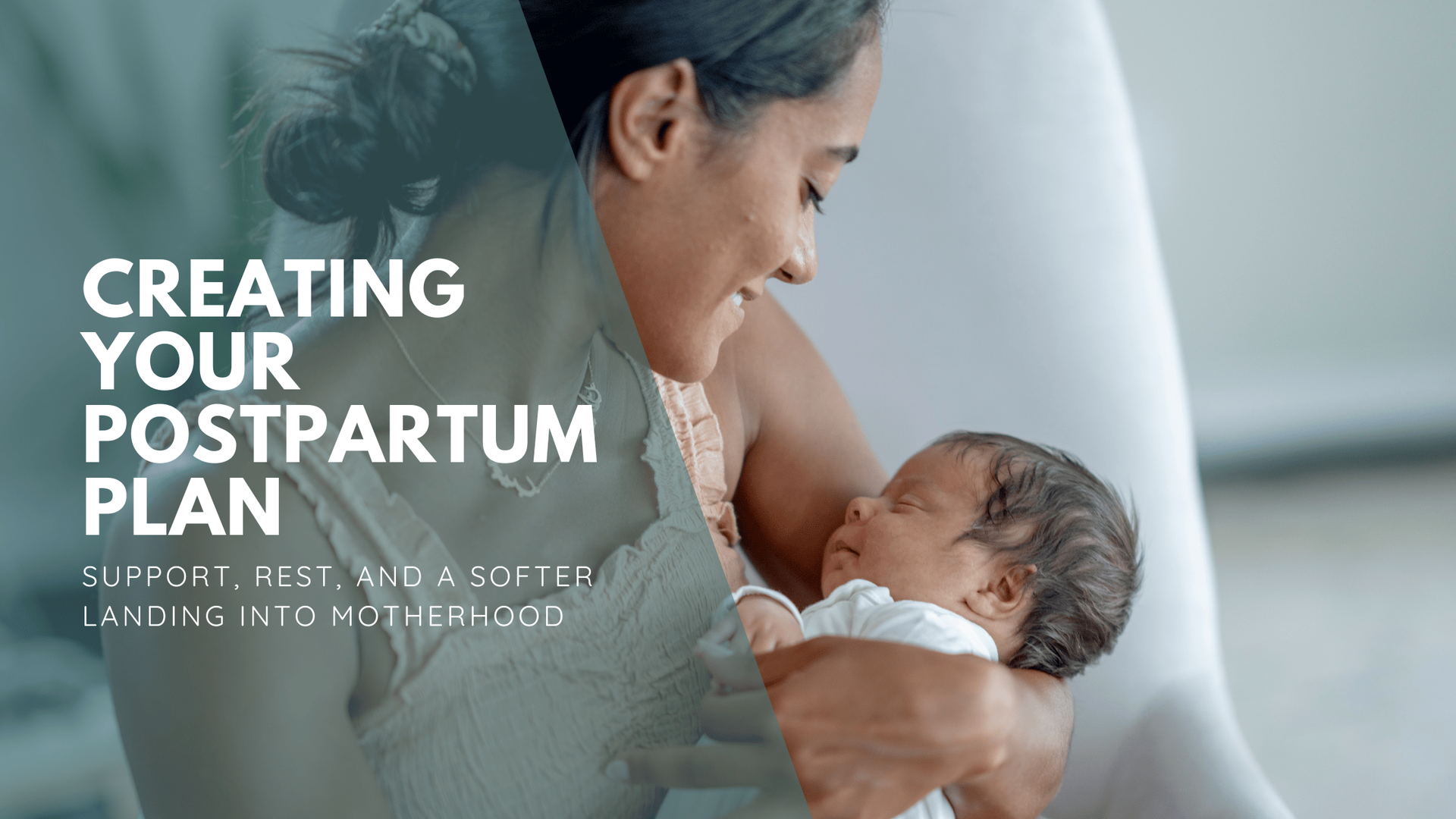
People spend so much time planning for labor that postpartum often gets pushed to the side. But those first days and weeks after birth matter just as much. Your body is healing. Your emotions are shifting. Your baby is adjusting to life on the outside. It is a big transition for everyone.
A postpartum plan gives you the support you need so you are not scrambling, exhausted, or trying to figure it all out alone. It creates space for rest, community, and a softer landing into your new chapter.
Here is how to build a postpartum plan that cares for you, your baby, and your whole home.
Start With You
Your baby is important, but so are you. Your body just did something incredible and deserves care, not pressure.
Physical support.
Think through what you will need for your own healing. Comfortable clothes. Nursing or pumping supplies. Snacks you can grab one handed. A big water bottle. Postpartum pads and care items. Somewhere cozy to rest. Whether you are
recovering from a vaginal birth or a C section, prepare your space so it feels gentle and supportive.
Emotional support.
Decide who is in your corner. This might be your partner, a close friend, a postpartum doula, or a perinatal mental health therapist. These are the people who can check in on you, sit with you during the tearful moments, and help you feel seen. Postpartum can feel lonely, but it does not have to be.
Think About Household Help
Your only job in early postpartum should be healing and bonding with your baby. Everything else can be delegated.
Meals
You can organize a meal train, prep freezer meals ahead of time, or even host a freezer meal party with friends and family.
Nourishing food makes an enormous difference when you are recovering and running on little sleep.
Chores
Light housework can be handed off. Your partner, family, or postpartum doula can take over dishes, laundry, tidying, and whatever piles up so you can rest.
Who Will Care for the Baby
It's okay if you don't want to do it all. No one expects you to.
Night care
If you're bottle feeding, trade shifts with your partner so you both rest. If you are breastfeeding, a postpartum doula can handle everything except the feeding itself so you can fall back asleep right after. Overnight support can change your entire recovery.
Daytime help
Let someone else hold the baby while you shower, nap, or simply breathe. Most people love baby time and are happy to help.
Build Your Support Circle
Gather your people before baby arrives. These may include:
- Postpartum doulas
- Lactation consultants
- A perinatal mental health therapist
- Trusted friends to run last minute errands
- Someone who can take older kids out
- A church or friend group who can drop off meals
- Your pediatrician and OB or midwife
- Anyone who makes you feel safe, cared for, and supported
Your support circle matters just as much as your baby gear.
Plan Childcare for Older Kids
If you have older children, choose who will be on call when labor starts. Talk through meals, pickups, bedtime routines, school drop offs, and anything else that keeps the family running smoothly.
Even after baby arrives, having backup childcare gives you time to rest and bond without juggling everything at once.
Organize Your Home for Baby
Set up the essentials before birth so you can ease into postpartum.
- A safe, firm sleep space
- White noise machine
- Soft lighting
- Blackout curtains
- A stocked changing area
- Feeding supplies
- A comfy chair for feeding
- Snacks and water within reach
These little details make newborn life feel calmer.
Create a List of Trusted Resources
Postpartum is full of surprises. Having support lined up makes a world of difference.
- Lactation consultants
- Pelvic floor therapists
- Perinatal mental health therapists
- Local or online support groups
- Your postpartum doula
- Pediatrician and OB contact information in one place
Support is easier to access when it is already written down.
Plan for Your Mental Health
Your mental and emotional well being matter just as much as your physical recovery.
Learn the signs of postpartum depression, anxiety, and other PMADs.
Be honest with someone you trust.
Reach out early if you feel overwhelmed.
Therapy or support groups can be life changing.
Postpartum emotions are big and unpredictable. You are not weak for needing help. You are human.
Stay Flexible
You can make the perfect plan and still need to shift things once baby arrives. That is okay. You're not failing if your postpartum season looks different than you imagined. The goal is support, not perfection.
You Deserve a Gentle Postpartum
Preparing now gives you room to rest, heal, and enjoy moments of calm as you adjust to life with your baby. You don't have to do this alone. If you want help creating your postpartum plan or need hands on support once baby is here, we would love to walk beside you.
Reach out anytime. Your postpartum deserves softness, support, and space to breathe.
FAQ
When should I make a postpartum plan?
The third trimester is ideal, but it is never too early or too late. Planning at any stage makes a difference.
What is the difference between a birth plan and a postpartum plan?
A birth plan covers labor preferences. A postpartum plan focuses on your healing, meals, newborn care, support people, and mental health.
Do I need a postpartum doula if I have family nearby?
Family can be wonderful, but a postpartum doula is trained to support your recovery and mental health without judgment or pressure. Many families love using both.