Babywearing Safety: Comfort, Closeness, and Confidence
Babywearing Safety: Comfort, Closeness, and Confidence
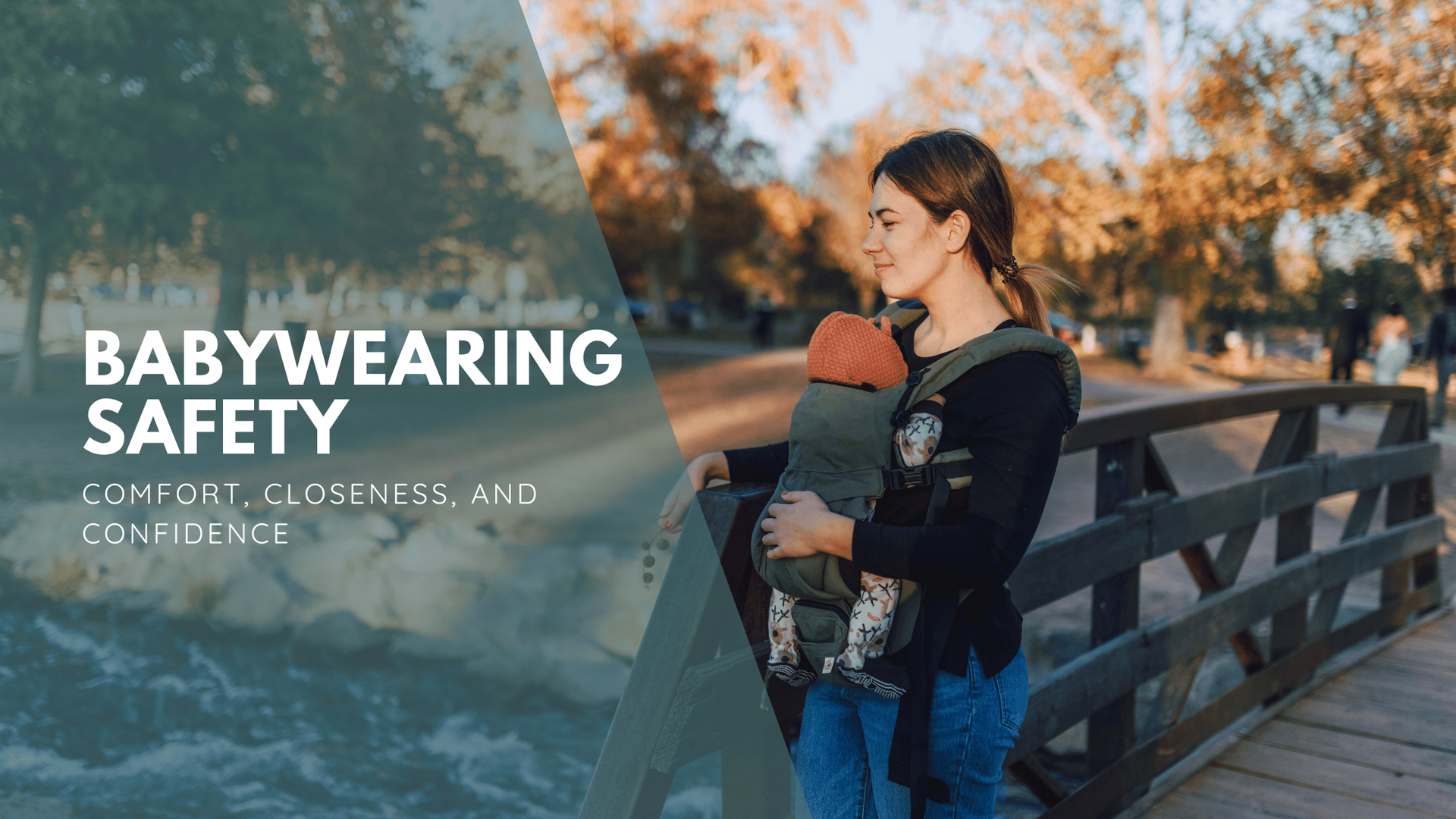
Babywearing can feel like magic. Your baby settles. Your hands are free. You might even get to eat a snack while it’s still warm.
But it’s also normal to feel a little nervous about it.
You’re holding your baby against your body. You’re adjusting straps and fabric while running on very little sleep. Of course, you want to make sure everything is safe.
If babywearing feels high-stakes, just know it’s great that you’re so attentive.
Many parents tell us they love the idea of babywearing but worry about airway safety, positioning, or whether their carrier is actually supportive. Add postpartum recovery and a partner back at work, and suddenly something that’s meant to be comforting feels like another thing to get “right.”
Let’s slow it down.
A Smart Babywearing Rule to Remember
If you only remember one thing, remember this: T.I.C.K.S.
T - Tight
Your carrier should be snug. If your baby can slump or pull away from your body, it’s too loose. A snug carrier keeps their airway open and their body supported.
I - In view at all times
You should always be able to see your baby’s face just by glancing down. No fabric over their nose or mouth, no chin tucked into their chest.
C - Close enough to kiss
Your baby’s head should sit high on your chest, close enough that you can kiss their forehead without leaning forward.
K - Keep chin off chest
There should be space under your baby’s chin so their airway stays open. A tucked chin can restrict breathing, especially in newborns.
S - Supported back
Your baby’s back should be gently supported in a natural curve, not straightened or slumped. Think supported and cozy, not stiff and upright.
After you get baby settled, do a quick mirror check. Can you see their face? Can you kiss their head? Does their weight feel evenly distributed? If yes, you’re on the right track.
Start With Breathing
Babywearing safety always starts with the airway.
Your baby’s nose and mouth should be completely clear. No fabric pressed against their face. Their chin should stay lifted, not tucked down. If your baby falls asleep and their chin drops, just gently reposition them.
Don’t worry about disturbing them. You’re protecting their breathing.
Support Those Hips and Spine
A good carrier supports your baby’s body, not just holds them in place.
You’re looking for that classic “M” shape with their legs: knees higher than their bottom, thighs supported, pelvis gently tilted forward. This position supports healthy hip development and tends to be more comfortable for babies.
If their legs are dangling straight down, it’s usually a sign to adjust the carrier or try a different one.
Your Comfort Matters Too
This part gets overlooked, but it’s important.
If babywearing hurts your shoulders or lower back, it’s not sustainable. Straps should feel supportive. They shouldn’t be digging in. Weight should feel balanced, not pulling you forward. If something feels off, it usually just needs a small adjustment.
Comfort for you means comfort for your baby.
A Few Extra Notes for Newborns
Newborns need a little extra attention when it comes to babywearing.
Use a carrier designed for their size. Avoid forward-facing positions. Take breaks and reposition during longer stretches. Check their temperature, especially if you’re both bundled up. Babies can overheat faster than you think.
If your baby seems unsettled, it doesn’t mean you’re doing it wrong. Try a different position, take a break, and try again later.
Common Babywearing Worries (and What’s Actually True)
If your baby fusses in the carrier, it doesn’t automatically mean something is unsafe. They might be hungry, tired, or ready for a diaper change.
Structured carriers aren’t the only safe option. Wraps and slings can be wonderful when they’re used correctly.
And no, you won’t always instantly know if something is off. That’s why simple safety checks matter. They take the guesswork out.
How Postpartum Doulas Help With Babywearing
You don’t have to figure this out alone.
As postpartum doulas, we can help fit carriers to your body, adjust your baby’s position, and troubleshoot discomfort or fussiness. Often, one small tweak makes babywearing go from stressful to soothing.
Our goal is for babywearing to feel like support, not another task on your mental load.
If you’re unsure about your setup or want a second set of eyes, we’re here.
Please reach out any time!
A Gentle Reminder
Babywearing isn’t supposed to be stressful. With a few checks, some gentle adjustments, and the right support, it can become one of the easiest ways to stay close to your baby while protecting your energy.
You’re not behind.
You’re not failing.
You’re learning your baby, and that’s exactly what matters.
FAQ
How long is it safe to wear my baby at one time?
There isn’t a strict time limit. Think about check-ins instead of hours. As long as your baby’s airway is clear, their body is well supported, and you feel comfortable, you’re good to keep going. If you or your baby start to feel uncomfortable, that’s your cue to reset.
Can I babywear if I’m recovering from a C-section?
Often, yes, and many parents find it really helpful once they’re cleared by their provider. Start slow, choose a carrier that distributes weight evenly, and pay attention to how your incision and core feel. Your comfort matters here.
Is babywearing safe if my baby was premature or has medical needs?
This depends on your baby’s specific situation. It’s always best to check with your provider first. If you do babywear, be extra mindful of airway positioning and how your baby responds in the carrier.
What if babywearing just doesn’t feel right for me?
That’s completely okay. Babywearing is a tool, not a requirement. Some parents love it, some tolerate it, and some skip it entirely. Supportive postpartum care is about what works for your body, your baby, and your season.