
Postpartum Triggers: Why They Happen and What Helps
This is a subtitle for your new post
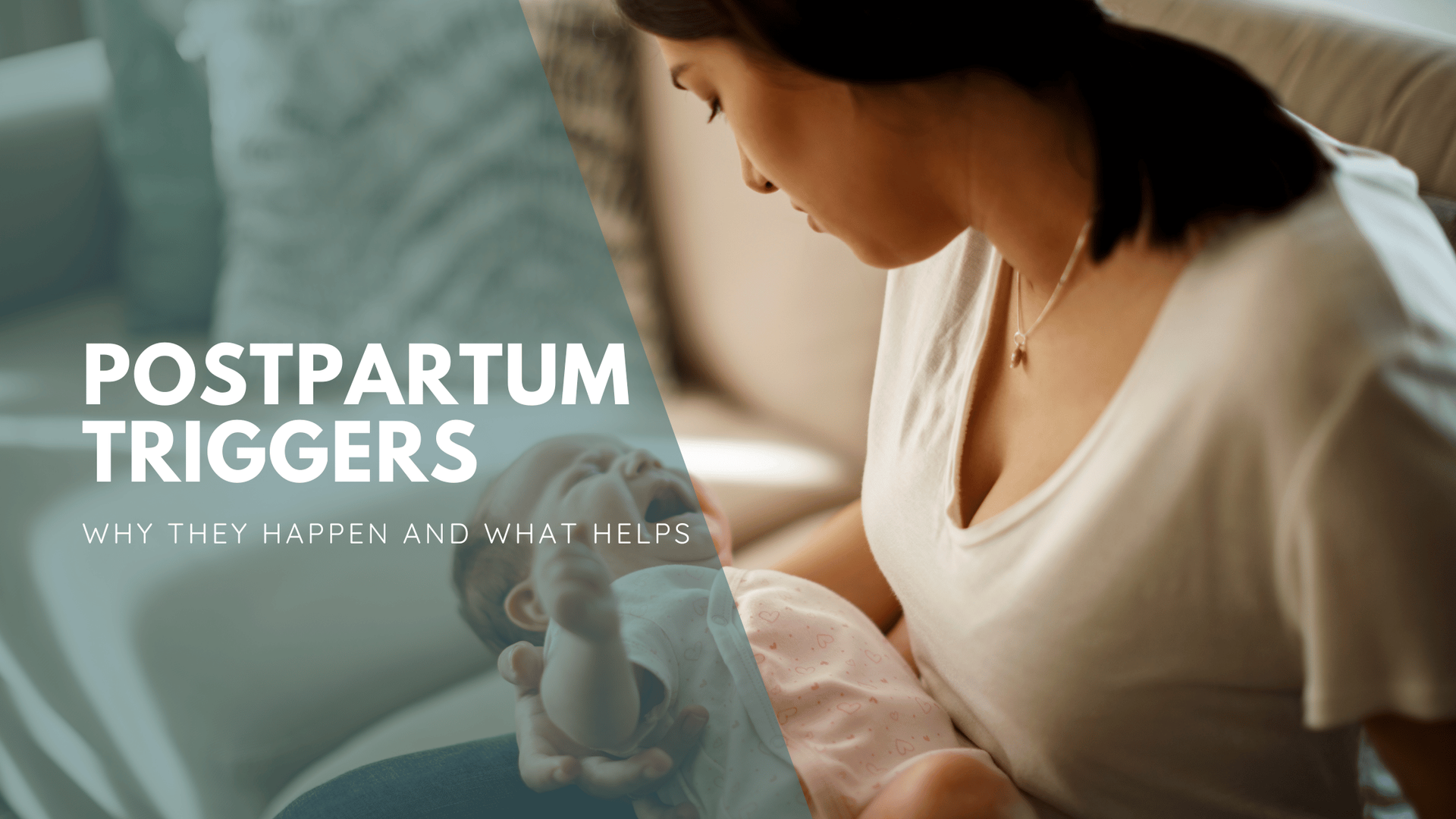
You might expect postpartum to be tiring. You might even expect it to be emotional.
What most people don’t expect is how small, ordinary moments can suddenly feel overwhelming.
A baby crying in the other room. A well‑meaning comment from family. The sound of your phone buzzing when you finally sit down. Even the quiet can feel unsettling.
These are postpartum triggers, but they don’t mean anything is wrong.
We want to help you process your feelings so you feel safe and confident.
You Might Get Triggered by New Things
You might wonder why you snap over small things or why you tense up without knowing why. Sometimes, you’ll notice you struggle to calm down, even when you know you’re safe.
After you have a baby, your nervous system starts to respond differently to daily life.
Your body is recovering, and your hormones are adapting. You’re getting less sleep, and you have so much more responsibility now. You’re more alert because it’s the best way your nervous system knows to protect you.
But that heightened awareness can make even small moments feel more intense than they are, and that’s hard to deal with.
Common Postpartum Triggers You Might Not Expect
Postpartum triggers aren’t always big, dramatic moments. Sometimes, they’re small and confusing.
Some common ones include:
- Crying or fussing: Even when you know your baby is safe, the sound can feel urgent, which can cause stress.
- Being interrupted: No one likes this, but it’s worse when you’re already depleted.
- Comments or advice: Even gentle suggestions can land as criticism.
- Lack of control: This can come from unpredictable schedules, plans changing, or feeling rushed.
- Being needed all the time: It’s okay if you want breaks where no one is touching or asking for anything.
- Silence: For some parents, quiet creates space for anxious thoughts to rush in.
Triggers sometimes just come from having too much on your plate and on your mind.
Why Postpartum Triggers Feel So Intense
Postpartum is a season where your nervous system is doing a lot of heavy lifting.
Your body may be operating closer to “high alert” because:
- Sleep deprivation reduces your ability to regulate stress.
- Hormonal shifts affect emotional processing.
- Your brain is constantly trying to figure out your baby’s needs.
- You may still be processing your birth experience.
When your system is overloaded, it reacts faster and recovers more slowly.
That’s why grounding (not pushing through) is so important.
Grounding Isn’t About Calming Down
Grounding doesn’t mean forcing yourself to relax or ignoring your feelings.
It’s about helping your body recognize that you’re here, you’re safe, and the moment will pass.
You can avoid every trigger, but you can learn to approach them with more grace and patience.
Gentle Ways to Ground Yourself
These are simple, realistic practices you can use in the middle of real life. And you don’t need lots of candles or hour‑long routines.
1. Anchor to Something Physical
When your thoughts are racing, stop what you’re doing and focus on physical sensations. You might notice how your feet feel on the cold floor or feel the texture of something you’re holding.
Try:
- Pressing your feet firmly into the floor
- Holding something cool or textured
- Placing a hand on your chest or belly and noticing the rise and fall
Physical sensations help interrupt the stress response.
2. Name What’s Happening
To help yourself regroup, quietly name what you’re experiencing. For instance, you might notice, 'This is overwhelming,' or, 'My nervous system is activated.'
You’re orienting yourself instead of pushing the feelings away.
3. Narrow Your Focus
Triggers often pull your attention in every direction at once.
To narrow your focus, look around and name:
- Three things you can see
- Two things you can feel
- One thing you can hear
Let each sense anchor you in the present moment. This helps your brain reconnect with the present moment.
4. Reduce Stimulation Where You Can
You don’t have to tolerate constant input, and there are ways to deal with that.
Try making some small adjustments:
- Lower the lights
- Turn off background noise
- Step outside for fresh air
- Ask someone else to hold the baby while you reset
Figure out what small changes you can make to help give you a calmer environment.
This isn’t avoidance. You’re regulating your nervous system.
5. Lean On Others
One of the biggest postpartum triggers is feeling like everything is on your shoulders.
The best support reduces your need to stay on high alert.
That might look like:
- Someone else cooking and cleaning
- Having help who doesn’t need your constant guidance.
- Being able to rest without listening for the baby
This kind of relief makes triggers easier to handle and helps your system recalibrate.
Triggers Are Trying to Tell You Something
It’s hard to believe, but triggers are helpful.
Often, they’re pointing to:
- Exhaustion
- Overstimulation
- A need for rest or boundaries
- Emotional processing that hasn’t had space yet
Paying attention to those signals can change your postpartum experience.
You’re Not Broken
If postpartum triggers have caught you off guard, please remember that you’re not weak, dramatic, or failing.
You’re going through one of the most intense transitions a nervous system can experience.
Support, grounding, and time can help steady your nervous system and reduce reactivity.
Reach Out If This Feels Familiar
If postpartum triggers are making daily life feel harder than it needs to be, support can help.
Reach out to talk about what grounded, respectful postpartum support could look like for you. You don’t need to be in crisis to deserve care. Sometimes you just need someone to help your nervous system rest.
Final Thought
You don’t need to eliminate every trigger to feel better.
You need safety, support, and space to land.
And that’s something you don’t have to create alone.
FAQ
Are postpartum triggers normal?
Yes. Many parents experience heightened sensitivity postpartum due to hormonal shifts, sleep deprivation, and increased responsibility.
Can postpartum triggers happen even if I loved my birth experience?
Absolutely. Triggers aren’t only linked to birth trauma. They can arise from exhaustion, overstimulation, and the nervous system adapting to constant caregiving.
How long do postpartum triggers last?
For many parents, triggers lessen as sleep improves and support increases. There’s no fixed timeline—gentle care and nervous‑system‑friendly support can help shorten the intensity.
When should I seek additional support?
If triggers feel unmanageable, persistent, or are affecting your ability to function, reaching out for support can be helpful. You don’t have to wait until things feel unbearable to ask for help.