Do Pregnancy Pillows Really Help? Benefits, Types, and What to Expect
Do Pregnancy Pillows Really Help? Benefits, Types, and What to Expect
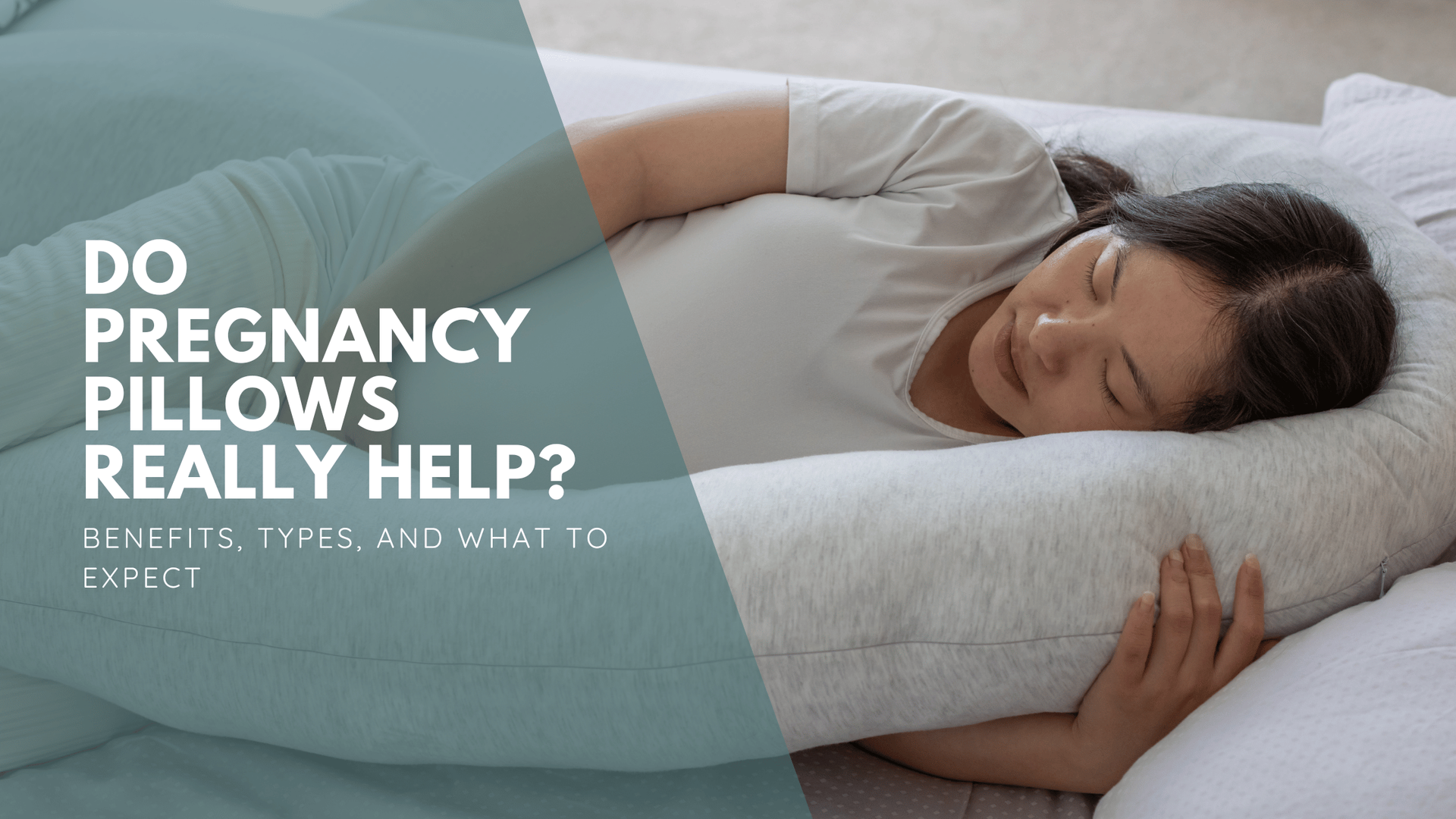
If you’re pregnant, don’t be surprised if you’re suddenly surrounded by pillows every night.
Maybe you’ve seen the giant U-shaped pregnancy pillows online and wondered if they’re really helpful. Or maybe you already have one, and you’re wondering if it should be doing more.
So what do pregnancy pillows do? Who do they help? Are they worth it?
Why Sleeping Gets So Uncomfortable During Pregnancy
It helps to understand why sleep suddenly feels harder.
As pregnancy progresses, your body is dealing with:
- A growing belly that pulls on your back and hips
- Looser ligaments thanks to hormones like relaxin
- Increased pressure on your pelvis
- The recommendation to sleep on your side (especially later in pregnancy)
- Waking up a lot for bathroom trips, heartburn, or discomfort
It’s no wonder it’s so hard to get comfortable, and even harder to stay that way. Pregnancy pillows support your body so you’re not fighting gravity all night.
What Pregnancy Pillows Are Designed to Do
A good pregnancy pillow isn’t magic, but it should be supportive.
It’s meant to:
- Support your belly so it’s not pulling on your spine.
- Keep your hips aligned while you’re sleeping on your side.
- Reduce lower back and pelvic pain.
- Give your knees something to rest on (which matters more than people realize).
- Help you stay comfortable on your side.
In short, there’s less strain on your body and more support.
Do They Really Help?
For many pregnant people, yes, they really do help. Maybe you won’t sleep like a baby every night (we’ll say it again: they’re not magic), but you hopefully won’t toss and turn all night or have so much hip pain. And it should be easier to get comfortable.
That’s a win during pregnancy.
Pregnancy pillows aren’t one-size-fits-all though. Some people love them immediately. Others need time to adjust. And some people are just fine with a few regular pillows.
Different Types of Pregnancy Pillows (And Who They’re Best For)
There are so many options, and it can be overwhelming. Here are some simple explanations:
U-shaped pillows
They support your back and belly at the same time. They’re great if you flip sides a lot or want full-body support.
C-shaped pillows
They support your belly and legs and leave space for your back. They’re nice if you don’t want something as bulky as a U-shaped pillow.
Wedge pillows
They’re small and targeted. They can be helpful for belly or back support without taking over the bed.
Body pillows
These are long and straight, and you can hug them or tuck them between your knees. They’re simple and versatile.
The “best” one is the one that supports your pain points and fits your space.
When Pregnancy Pillows Help the Most
Pregnancy pillows tend to be especially helpful if you’re dealing with:
- Hip or pelvic pain
- Lower back pain
- Trouble staying on your side
- Feeling like your belly is pulling uncomfortably
- Restless sleep from constant repositioning
People appreciate them most in the second and third trimesters, when their bodies have a harder time resting at night.
When They Might Not Be Enough
A pregnancy pillow won’t fix everything.
If you’re dealing with significant pelvic pain, sciatica, or sleep disruption, you might also need:
- Adjustments to how you’re positioning your legs and hips
- Support from a pelvic floor physical therapist
- Changes to your bedtime routine
- Extra support during the day (rest, movement, stretching)
The pillow is a tool, not a cure-all.
Can You Use One After Birth?
Absolutely.
Many families keep using pregnancy pillows postpartum for:
- Feeding support
- Extra comfort during recovery
- Side sleeping support
- Contact naps or just resting safely while you’re awake
So, Are Pregnancy Pillows Worth It?
If sleep has become uncomfortable, disrupted, or painful, and you’re waking up sore, a pregnancy pillow could help.
Not perfectly or instantly, but enough to make nights feel more manageable, and that matters.
Needing extra support to sleep doesn’t mean you’re doing anything wrong. It means your body is doing something big.
Whether that support comes from a pregnancy pillow, a stack of regular pillows, or a mix of both, you’re allowed to make yourself more comfortable.
You deserve rest, even when it takes a little creativity to get there.
You Don’t Have to Figure This Out Alone
At Utah Postpartum Care, we support families through postpartum. If discomfort, exhaustion, or overwhelm are creeping in, you don’t have to push through it alone. Support can make a real difference.
Reach out anytime. We’re here to help your nights (and days) feel a little easier.
FAQ
Can pregnancy pillows help with acid reflux or heartburn?
Some positions with a wedge or full-body pillow can slightly elevate the upper body, which may reduce nighttime reflux.
Are pregnancy pillows safe to use in bed with pets or other children?
Yes, but it’s important to keep the area clear to prevent accidental rolling or crushing.
Can pregnancy pillows help with hip or pelvic pain?
Yes, strategically placing a pillow between the knees or under the belly can relieve pressure on the hips and pelvis.
Can I use a pregnancy pillow if I’m a back sleeper?
Absolutely. U-shaped or wedge pillows can support the back and prevent rolling onto your stomach, while still offering side support.