Healing Happens in Safety: What Trauma-Informed Postpartum Care Looks Like
Healing Happens in Safety: What Trauma-Informed Postpartum Care Looks Like
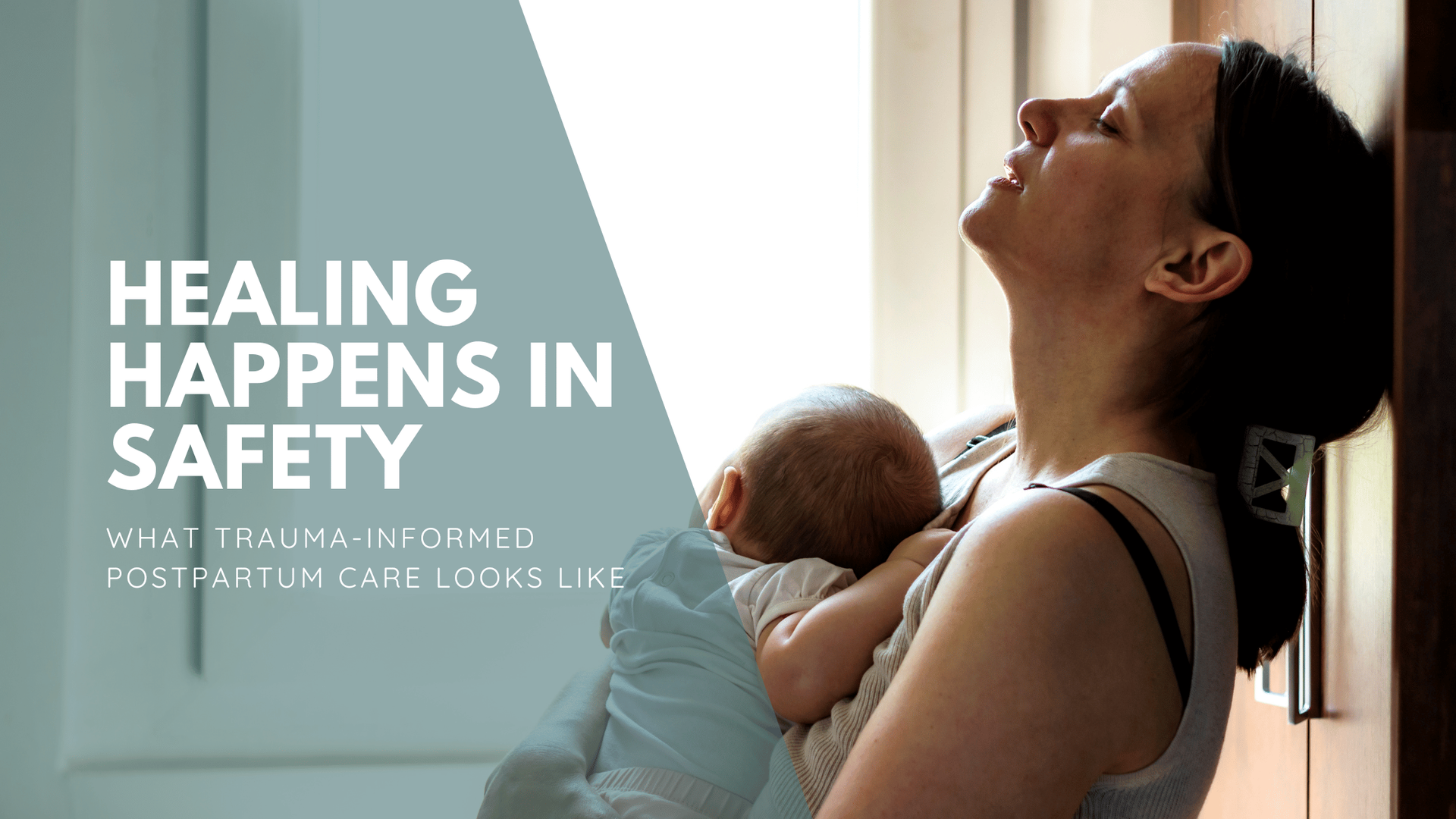
It’s easy to find yourself trying to rush to heal after you give birth. But then you might wonder why it’s so difficult.
Healing doesn’t come from pushing through the hard parts.
It comes from feeling safe.
Not “rest when you can” safe.
Not “you’re doing great, just sleep” safe.
The kind of safe where your body actually lets go.
For most new parents, postpartum isn’t just about physical recovery or learning how to keep a baby alive. It’s your whole system trying to adjust after something big. Pregnancy. Birth. The sudden responsibility. The loss of autonomy. The intensity of it all.
It doesn’t matter if nothing “went wrong.” If your birth felt overwhelming, rushed, scary, or just very different from what you expected, your body may still be holding onto those feelings weeks later, and sometimes, longer than that.
That’s why trauma-informed postpartum care is so important.
Healing happens when your body feels safe.
postpartum might feel harder than you expected
Does any of this sound familiar?
You finally lie down, but you feel on edge.
You get overwhelmed faster than you used to.
You have help, but you still can’t relax.
Certain moments from birth or early postpartum keep replaying in your head.
And then you feel guilty.
Other people had it worse.
I should just be grateful.
Nothing really went wrong.
But trauma doesn’t always happen from a huge disaster. Sometimes it’s about feeling unheard, out of control, unsupported, or alone during a moment when you were incredibly vulnerable.
That includes childbirth and postpartum.
Trauma-informed care starts by taking that seriously, without trying to fix it, minimize it, or rush you past it.
So what does “trauma-informed” mean?
Don’t worry. It’s not a checklist or a script you have to follow. It’s a way of supporting someone that prioritizes safety, autonomy, and trust.
It’s an approach that recognizes some simple truths:
- Your nervous system matters.
- Your pace matters.
- Your consent matters.
- Your experience and feelings don’t need to be justified.
With trauma-informed care, support is tailored specifically to your needs based on your personal experiences.
With this approach to healing, your body might still be processing something, but you can learn to respond with patience instead of urgency.
What that looks like day to day
Safety is the priority.
Forget productivity, milestones, or worrying about how things “should” look (we know it’s easier said than done).
Safety means not feeling watched, rushed, or feeling like you’re failing.
Sometimes it means moving slowly, getting some quiet time, or letting someone else take some things off your plate.
Choice is important.
A lot of birth trauma comes from things happening to you instead of with you.
Trauma-informed postpartum care brings choice back in small ways, like:
- Asking before helping
- Explaining instead of assuming
- Letting “no” be a complete answer
“Would it help if I did this?”
“Do you want ideas, or do you just want company?”
Those switches matter more than they seem.
Your nervous system is treated gently.
If rest doesn’t feel restful, that’s your body’s way of protecting itself. Give yourself grace.
Trauma-informed support understands that:
- Hyper-alertness is often protective
- Emotional swings are information, not problems
- Regulation happens through consistency and connection
Sometimes support is less about doing and more about providing predictability, less stimulation, and a sense of calm.
The goal isn’t to fix you. It’s to help your body feel safe enough to settle on its own.
You don’t have to stay positive or focus on gratitude to make others feel better. Joy and grief can live side by side during postpartum. So can love, anger, relief, and confusion.
Being honest about your feelings without feeling judged gives you more safety and healing.
What does trauma-informed postpartum support look like?
It’s usually quiet.
Someone takes care of your meals without asking you any questions.
You have a steady presence when you’re feeling emotional.
You don’t have to explain everything to the person helping.
A trauma-informed postpartum doula doesn’t ignore your instincts or push you when you’re uncomfortable. They work with you to create space for healing instead of forcing it.
You don’t need to be “struggling enough.”
Some people think trauma-informed care is for people who have been through something extreme.
But it’s for anyone. It’s for parents who want postpartum to feel less overwhelming and more grounded.
You don’t need a diagnosis or some dramatic story.
You deserve care that helps you feel safe.
Healing happens in small moments, and trauma-informed postpartum care doesn’t rush those moments. It trusts your body to know the way.
If this feels like the kind of support you want, we’d love to talk about what might help you feel safer and more supported as you heal.
FAQ
Can trauma-informed postpartum care help if I don’t know why I feel on edge?
Yes. That’s not unusual. You don’t have to identify or explain what you’re feeling. Support is centered on helping your body and mind feel safer, even when emotions are hard to name.
Does trauma-informed care mean talking about my birth experience?
Only if you want to talk about it. Trauma-informed postpartum care respects your boundaries.
Can trauma-informed postpartum care support partners too?
Yes. Partners carry their own stress and emotional weight after birth. Trauma-informed care acknowledges the whole household and can offer guidance to help everyone feel more grounded.